Planning Guide · Last updated July 9, 2026 · By the ColdDMCalculator team
Cold DM Campaign Planning Checklist: What to Confirm Before You Send
Cold DM campaigns rarely fail because of one big mistake. They fail because five small gaps stack up: a fuzzy audience, optimistic assumptions, generic messaging, ignored platform limits, and no plan for what happens after you hit send. This checklist walks through all five before you launch.
1. Audience & targeting
- Is your audience narrow enough that a stranger would recognize why you're messaging them?
- Do you know the realistic size of your addressable audience, not just a platform search count?
- Have you segmented the audience so messaging can be tailored to a specific role or situation?
- Is your outreach list built from public, permissible sources — not scraped private data?
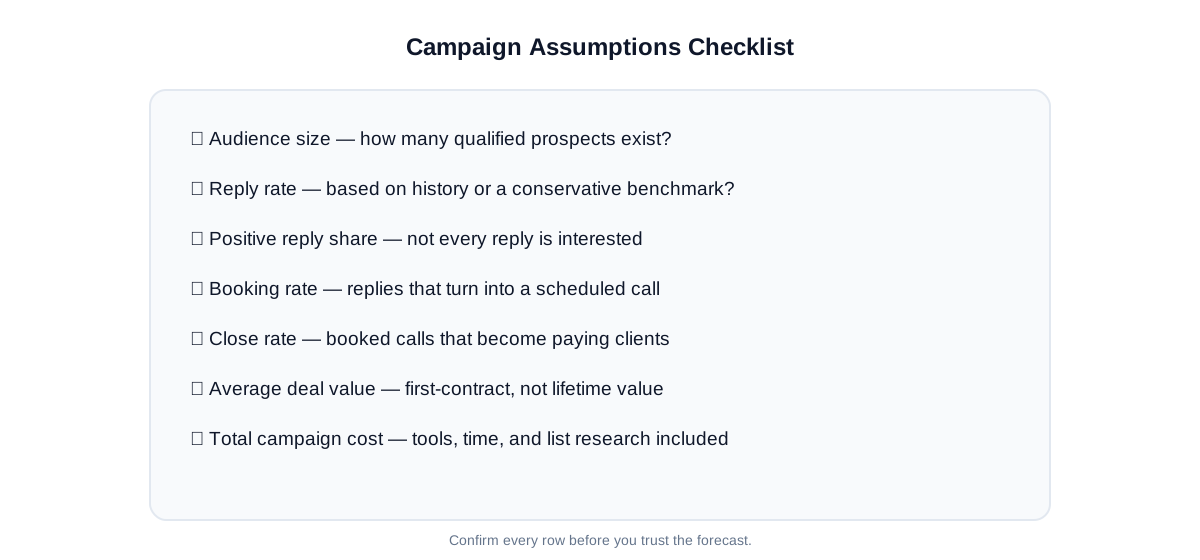
2. Assumptions & math
- Are your reply, booking, and close rates from real history or a conservative benchmark?
- Have you built a conservative scenario, not just a best-case forecast?
- Does your total cost include tools, list research, and your own time?
- Do you know your break-even DM count, and is it inside your planned volume?
3. Message & personalization
- Is every message personalized to something specific about the recipient, not a copy-paste blast?
- Does the message lead with a clear, low-friction ask instead of a wall of pitching?
- Have you tested the message on a small batch before scaling volume?
- Do you have a follow-up sequence planned, with a defined stop point?
4. Compliance & platform rules
- Does your planned daily volume respect the platform's messaging limits?
- Will you honor opt-outs, blocks, and a direct 'no' immediately?
- Are you avoiding fake accounts, purchased followers, or automation that violates platform terms?
- Have you reviewed the platform's current policies, since limits and rules change over time?
5. Launch readiness
- Do you have time blocked to respond to replies within hours, not days?
- Are your kill criteria written down before the first message goes out?
- Do you have a way to track sent, replies, calls, and clients without relying on memory?
- Have you scheduled a check-in point to re-run the forecast with real data?
Why the order matters
It's tempting to start with the message — writing a great DM feels like progress. But a great message sent to the wrong audience, at a volume that breaks even, or in a way that violates platform rules, still fails. Working through audience and assumptions first means you're only refining messaging for a campaign that's already worth running.
If you haven't quantified your assumptions yet, run them through the free calculator first — it turns section 2 of this checklist into a two-minute exercise and flags stacked-optimism risk automatically. For a deeper walkthrough of the forecasting process itself, see how to forecast cold DM campaign results.
A quick worked example
Imagine you're planning outreach to marketing agency owners on LinkedIn. Working through the checklist in order:
- Audience:You narrow “agency owners” down to agencies with 5–20 employees in a specific service niche — a list you can actually justify messaging.
- Assumptions: You forecast at a 6% reply rate (conservative, based on published benchmarks) and confirm the campaign is still profitable at that rate before scaling volume.
- Message:You reference something specific from each agency's recent work rather than sending a templated pitch, and test it on 30 prospects before sending 300.
- Compliance:You cap daily sends well under the platform's messaging limits and commit to honoring every opt-out immediately.
- Launch readiness: You block two hours a day to respond to replies and set a kill criterion: pause and re-evaluate if reply rate is under 3% after the first 150 DMs.
Common planning mistakes
- Writing the message before defining the audience or the math.
- Treating a platform's search result count as your real addressable audience.
- Skipping a small test batch and sending full volume on day one.
- No written kill criteria, so a weak campaign runs for weeks past the point it should have stopped.
- Ignoring platform-specific messaging limits until an account gets restricted.
Frequently asked questions
How is this checklist different from a risk checklist?
This checklist covers the full planning process from targeting through launch. The dedicated risk checklist focuses specifically on profitability, assumption, execution, and compliance risk scoring once a plan already exists.
Do I need to complete every item before sending a single DM?
Treat the audience, assumptions, and compliance sections as non-negotiable. The message and launch-readiness sections can be refined in a small test batch before you scale volume.
How often should I revisit this checklist?
Re-run it for every new campaign or audience segment, and again anytime you change platform, message angle, or significantly increase volume.
Turn this checklist into a forecast.
Enter your assumptions and see replies, booked calls, clients, and risk in one view.
Forecasts are estimates based on user-provided assumptions. Results are not guaranteed.
Related: How to Forecast Campaign Results · Risk Checklist · Campaign Planning Template · Contact us with questions.