Law of Averages for Cold DMs: Use Large Numbers to Forecast Replies and Calls
Cold DM outreach can feel random when you judge it one tiny batch at a time. You send 50 Instagram DMs and get five replies. The next 50 get none. One LinkedIn segment books calls. Another goes quiet. The law of averages and the law of large numbers explain why small samples swing, and how to use campaign volume without turning outreach into blind spam.
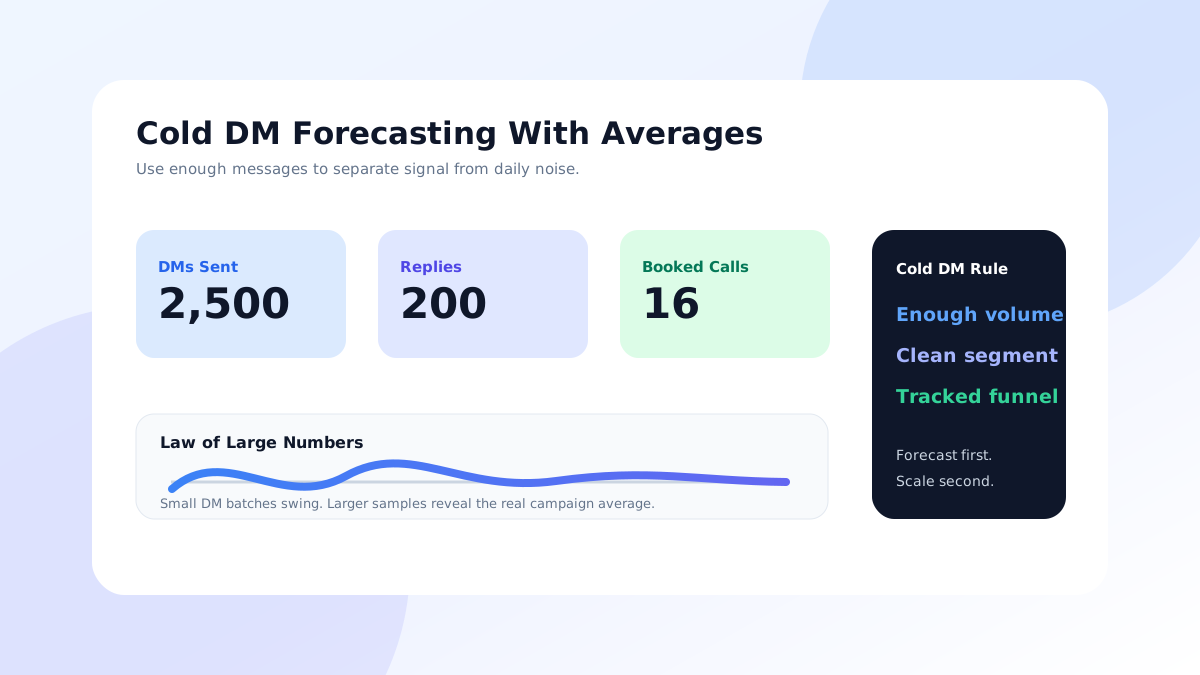
Short answer: the law of large numbers means cold DM results become easier to forecast as message volume increases, assuming your audience, profile, offer, and message quality stay consistent. Do not judge a campaign from 50 or 100 DMs. Use enough volume to read the average, then measure the full funnel from messages to revenue.
What the law of averages means for cold DM sales
In sales, people often say, "If you do enough outreach, the numbers average out." That idea is useful, but only when it is used carefully. For cold DMs, it means that if you send to a consistent type of prospect with a consistent message, your results should move closer to the real campaign average as the sample gets larger.
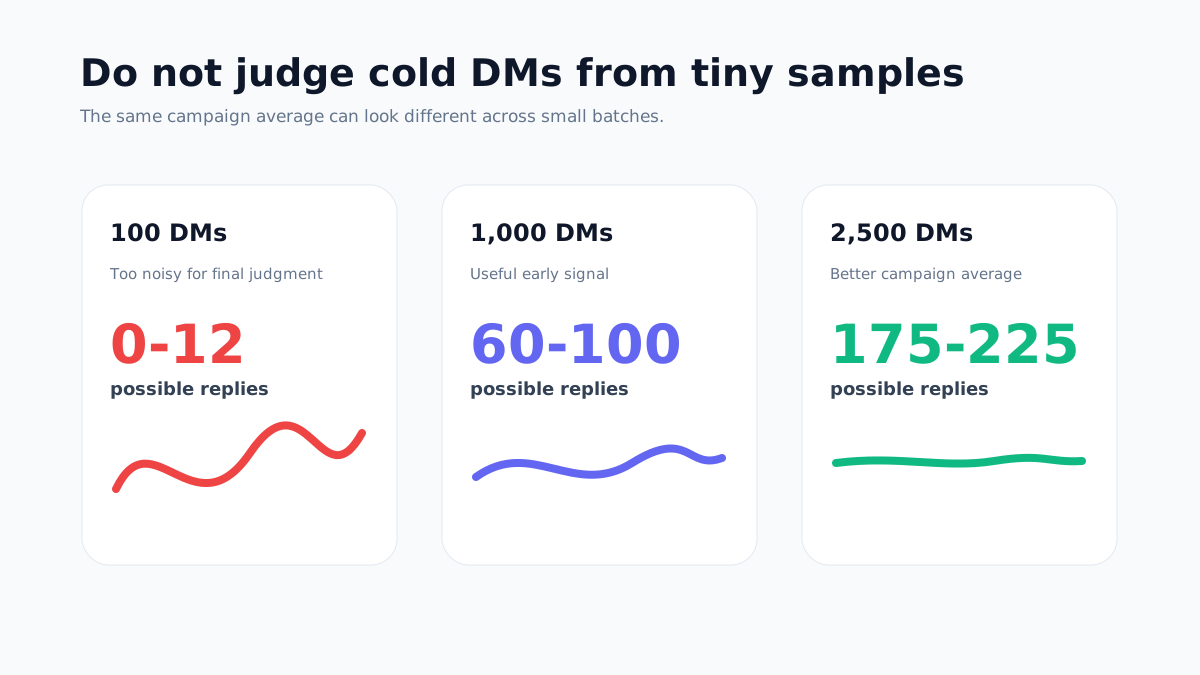
If your true reply rate is around 8%, you should expect about 80 replies from 1,000 DMs. But that does not mean every group of 100 messages will produce exactly eight replies. One batch might produce two. Another might produce fourteen. Small batches are noisy. Larger samples help the average become more meaningful.
The law of large numbers is the formal version of this idea. As the number of observations increases, the sample average tends to move closer to the expected average. In cold DM language: do not change your entire strategy because one afternoon of sending felt bad.
Why tiny cold DM samples mislead you
A campaign with 100 DMs is rarely enough to judge reply rate, positive conversation rate, booked call rate, or ROI. If the expected reply rate is 8%, the expected number of replies is only eight. A few extra replies can make the campaign look amazing. A few missing replies can make it look broken.
This is why founders and agencies often make emotional decisions too early. They send 75 DMs, get one reply, and decide the platform does not work. Or they send 120 DMs, get 18 replies, and immediately scale a message that has not proven it can create qualified calls. Both reactions can be wrong because the sample is too small.
Early sending should be used for quality control. Check whether your profile looks trustworthy, your opener is clear, your audience is relevant, and your first replies make sense. Save final performance judgment for a larger sample.
Cold DM averages only work with consistent inputs
The law of large numbers does not mean "send more random DMs." It only helps when the observations belong to the same basic system. If you mix creators, local businesses, SaaS founders, coaches, real estate agents, and agencies into one report, the average may hide more than it reveals.
Segment your campaigns before you judge averages. Track Instagram separately from LinkedIn. Track creators separately from local service businesses. Track cold first-touch DMs separately from follow-ups. A clean segment gives the average a real meaning.
The full cold DM funnel, not just replies
Reply rate is important, but it is not the finish line. A campaign can get many replies and still fail if the replies are low intent, the conversation stalls, or prospects do not book calls. Large-number thinking should apply to every stage of the funnel.
- Messages sent: the total first-touch DMs sent to a defined segment.
- Reply rate: replies divided by messages sent.
- Positive conversation rate: interested or useful replies divided by total replies.
- Booked call rate: booked calls divided by positive conversations.
- Close rate: clients divided by showed calls.
- ROI: profit divided by campaign cost.
If you only measure reply rate, you can scale the wrong campaign. The best message is not always the one that gets the most attention. It is the one that creates qualified conversations, calls, clients, and profit.
Example: forecasting with average-based DM math
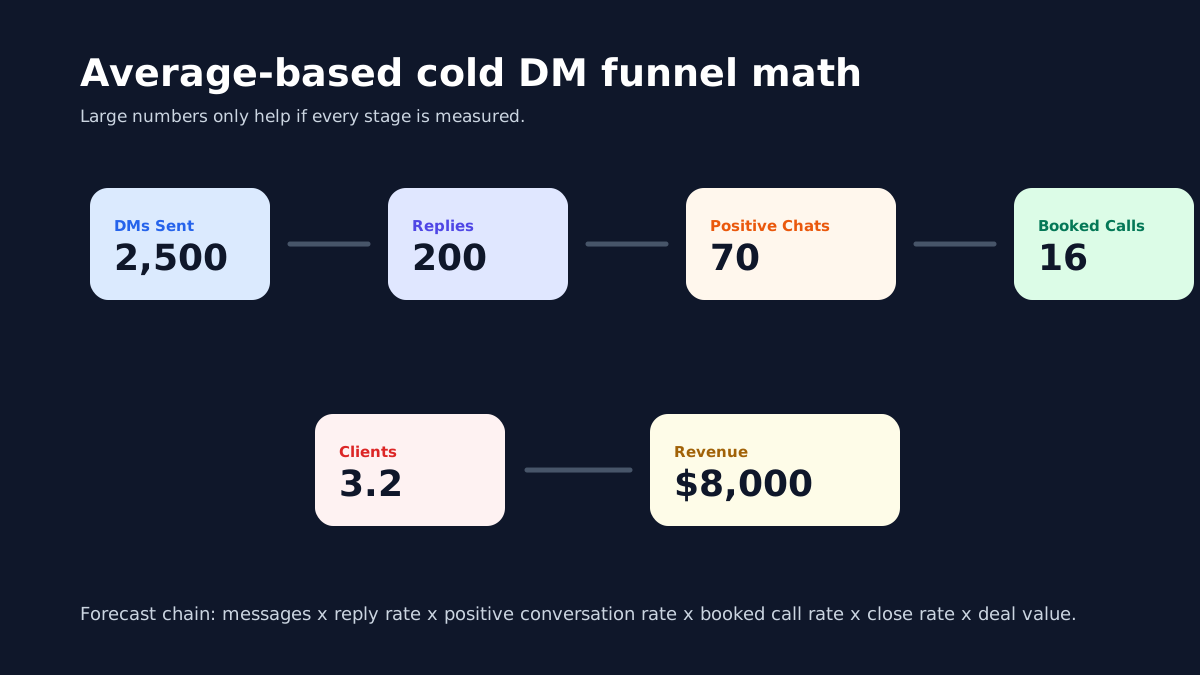
Imagine you plan to send 2,500 cold DMs to a clean Instagram prospect segment. You expect an 8% reply rate, 35% of replies to become positive conversations, 23% of positive conversations to book a call, and 20% of showed calls to close. If your average deal value is $2,500, the campaign can be forecast before you send.
| Step | Formula | Forecast |
|---|---|---|
| Replies | 2,500 x 8% | 200 |
| Positive conversations | 200 x 35% | 70 |
| Booked calls | 70 x 23% | 16 |
| Clients | 16 x 20% | 3.2 |
| Revenue | 3.2 x $2,500 | $8,000 |
This forecast is not a guarantee. It is a planning model. The actual campaign may close two clients or five clients. But it gives you a baseline for budget, time, list size, and expectations.
How many cold DMs are enough?
There is no perfect number for every campaign, but you can use review windows. The first 100 to 250 DMs are a quality-control window. Look for broken links, awkward openers, bad targeting, profile trust issues, and obvious objections. The first 500 to 1,000 DMs are an early signal window. You can start seeing whether reply rate and positive conversation rate are directionally reasonable.
For stronger conclusions, aim for 1,500 to 3,000 messages inside one clean segment. That does not mean everyone should send that much at once. It means you should avoid pretending that a tiny sample has the certainty of a full campaign.
Where cold DM teams misuse the law of averages
The most common mistake is using the law of averages as an excuse to keep sending a weak campaign. More volume will not fix a bad offer, a low-trust profile, poor personalization, or the wrong audience. It will simply reveal the weak average more clearly.
The second mistake is changing too many things at once. If you change the audience, opener, platform, follow-up timing, and offer in the same week, you will not know which change affected the average. Keep the test clean enough that the result teaches you something.
A simple operating rule
Before launching, define your review windows and decision rules. For example: do not judge performance before 500 DMs, do not scale before 1,000 DMs, and do not declare the segment proven until you have enough positive conversations and booked calls to compare against the forecast.
This protects the campaign from two bad habits: quitting too early after a noisy batch, and scaling too early after a lucky batch. Good outreach teams stay patient without becoming passive. They watch the averages, inspect the replies, and improve the system.
Platform differences matter
Instagram, LinkedIn, X, TikTok, and creator platforms do not behave the same way. The law of large numbers still applies, but the average you are trying to learn may be different on each platform. Instagram DMs may depend heavily on profile trust, niche relevance, and whether the recipient checks message requests. LinkedIn DMs may depend more on role fit, connection context, and professional relevance. TikTok or creator outreach may depend on audience size, posting activity, and whether the creator treats DMs as business inquiries.
That means you should not combine every channel into one blended cold DM average unless you are reporting total business output. For diagnosis, keep separate averages by platform and audience. If Instagram gets an 11% reply rate and LinkedIn gets a 4% reply rate, the lesson is not simply "send more Instagram DMs." The lesson is to inspect reply quality, booked call rate, cost, and client value for each channel.
Checklist before you trust the average
Before you use a campaign average to make a scaling decision, check the inputs. The average is only useful if the underlying campaign is clean enough to measure.
- Audience: Are you sending to one clear ICP or a blended prospect list?
- Profile trust: Does your profile explain who you help and why a stranger should respond?
- Message consistency: Are the opener, offer, and CTA similar enough to compare?
- Follow-up timing: Are follow-ups sent consistently, or does the campaign stop after one touch?
- Reply tagging: Are you separating positive replies from objections, low-fit replies, and noise?
- Sales handoff: Are positive conversations being handled quickly enough to book calls?
If those inputs are messy, a larger sample can still produce a number, but that number may not tell you what to improve. Clean tracking turns the law of large numbers into a practical sales tool.
Use the calculator before you scale
The easiest way to apply this is to work backward from the outcome. If you need three clients, estimate your close rate, booked call rate, positive conversation rate, and reply rate. Then calculate how many DMs you need to send to have a realistic shot at that outcome.
You can do the math manually, or use the Cold DM Calculator to forecast replies, booked calls, clients, revenue, profit, ROI, and cost per client from your assumptions.
Forecast your cold DM averages before sending
Use the free calculator to model DM volume, reply rate, booked calls, clients, revenue, profit, and ROI before you scale outreach.
Use the Cold DM CalculatorFinal takeaway
The law of averages and the law of large numbers help cold DM teams stay calm. They explain why small batches swing, why larger samples are easier to read, and why campaign decisions should be based on funnel math instead of one lucky or unlucky day.
Use enough volume to learn something real. Keep your segments clean. Track the full path from message to money. Then improve the part of the funnel that limits growth.