Cold DM Opening Message Benchmarks: What to Measure Before Scaling
The first cold DM does more than start a conversation. It filters attention, frames your offer, protects your sender reputation, and determines whether the rest of your funnel has enough quality to scale. That is why opening message benchmarks should measure more than reply rate.
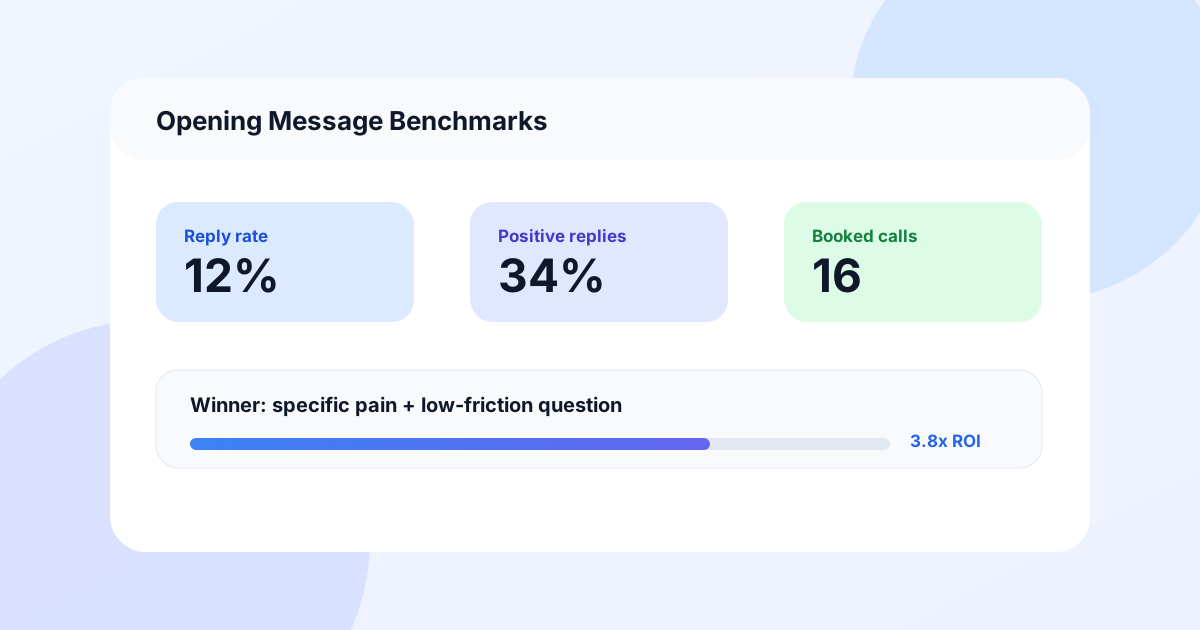
A cold DM opener can get plenty of replies and still be a bad business asset. If the message creates curiosity from people who will never buy, it fills the inbox with work. If it gets low replies from a tightly qualified audience but turns into booked calls, it may be the stronger campaign.
Fast answer: benchmark cold DM opening messages by reply rate, positive conversation rate, booked call rate, cost per booked call, projected ROI, and complaint risk. Reply rate is useful, but it is not the finish line.
Why Opener Benchmarks Matter
The opener is the highest leverage piece of a cold DM campaign because it touches every prospect. A small improvement in the first message can increase replies, but a sharper improvement can also reduce wasted conversations, shorten sales cycles, and make follow-ups easier.
Benchmarks give you a decision rule. Instead of asking whether a message feels good, you can ask whether it earns enough quality replies to justify more sending. That matters for agencies, founders, consultants, creators, recruiters, and service businesses that need predictable outbound math.
The Metrics to Track for Every Opening Message
Start with a small test, usually 100 to 300 targeted prospects per opener. Track each version separately. If you mix messages, segments, and platforms in the same spreadsheet, you will not know what caused the result.
| Benchmark | Formula | Why it matters |
|---|---|---|
| Reply rate | Replies / DMs sent | Shows whether the opener earns attention from the audience. |
| Positive conversation rate | Positive replies / total replies | Separates useful interest from objections, confusion, and low-fit chatter. |
| Booked call rate | Booked calls / positive replies | Shows whether the opener creates a path to a sales conversation. |
| Cost per booked call | Campaign cost / booked calls | Connects copy performance to acquisition economics. |
| Projected ROI | Expected profit / campaign cost | Helps you decide whether the opener is worth scaling. |
| Risk signals | Complaints, blocks, negative replies | Protects deliverability, account health, and brand trust. |
What Is a Good Cold DM Opening Benchmark?
A good opener is not the one with the highest reply rate in isolation. The better question is whether the opener produces qualified conversations at a cost that makes sense for your offer.
For many B2B service campaigns, a healthy test might show a modest reply rate, a strong positive conversation rate, and a clear route to booked calls. For creator partnerships, local service outreach, or recruiting, the reply rate may be higher, but the quality filter still matters.
As a practical starting point, compare openers with this standard: does the message create enough positive replies to make the next 1,000 sends financially rational? If not, keep testing before scaling.
Segment Benchmarks by Platform and Intent
A cold DM opener that performs on Instagram may not perform on LinkedIn, and a message that works for warm profile visitors may fail when sent to a scraped cold list. Platform context changes how direct the opener can be, how much personalization is expected, and how quickly the prospect will tolerate a business question.
For LinkedIn, benchmark professional relevance and proof. Prospects expect a business reason for the message, so vague curiosity openers can feel weak. For Instagram, profile fit, visual credibility, and conversational tone may matter more. For X, community context and recent posts can make the difference between a relevant opener and a random pitch.
Intent source also matters. A prospect who liked your post, followed a competitor, downloaded a guide, or visited a profile has a different baseline than a completely cold contact. Keep those groups separate in your report. Otherwise one high-intent segment can make a mediocre opener look better than it really is.
Five Opening Message Styles Worth Testing
Different markets respond to different openers. The goal is not to find one universal script. The goal is to find the message style that creates the best economics for your exact audience.
1. Specific Pain Opener
This opener leads with a problem the prospect likely recognizes. It works best when the audience has a visible pain signal, such as slow lead response, outdated content, poor booking flow, low review volume, or a leaky sales process.
Noticed your team is running paid traffic to the booking page, but the first follow-up after form submit looks manual. Are you trying to improve speed-to-lead this quarter?
2. Profile-Based Observation Opener
This opener references something visible on the prospect's profile, website, content, or offer. It usually feels more personal because the prospect can see that the message was not pasted blindly.
Saw your recent post about adding two new coaches. Are you already using DMs to turn profile visitors into consult calls, or is that still mostly organic right now?
3. Trigger-Based Opener
This opener is tied to a current event: hiring, launching, expanding, posting a new offer, opening a location, or increasing ad spend. Trigger-based DMs often perform well because timing is built into the message.
Congrats on the new location. Are you planning to use Instagram DMs to re-engage local followers before the launch week?
4. Useful Idea Opener
This opener offers a small, relevant idea without asking for a meeting immediately. It works well when the audience is skeptical of pitches but open to practical help.
Had one quick idea for turning your pinned case study into a DM follow-up sequence. Worth sending over?
5. Direct Offer Opener
This opener is clearer and more commercial. It can work when the offer is urgent, narrow, and easy to understand. It can also create more negative replies if the audience is broad, so watch risk signals closely.
We help B2B consultants turn LinkedIn profile visitors into booked calls with a done-for-you DM follow-up system. Is that something you are testing this month?
How to Test Opening Messages Fairly
Cold DM tests get messy when too many variables change at once. Keep the audience, platform, sending window, profile, and follow-up sequence as consistent as possible. Only change the opener.
- Choose one niche and one clear offer.
- Create two to four opener variations.
- Send each variation to a similar-sized prospect group.
- Track replies, positive replies, booked calls, and negative signals.
- Use the Cold DM Calculator to model revenue, profit, ROI, and cost per client.
Do not declare a winner after ten sends. Small samples are noisy. A message that looks amazing after 25 prospects can flatten out quickly. Wait until each opener has enough volume to reveal the pattern.
Score Each Opener Before Scaling
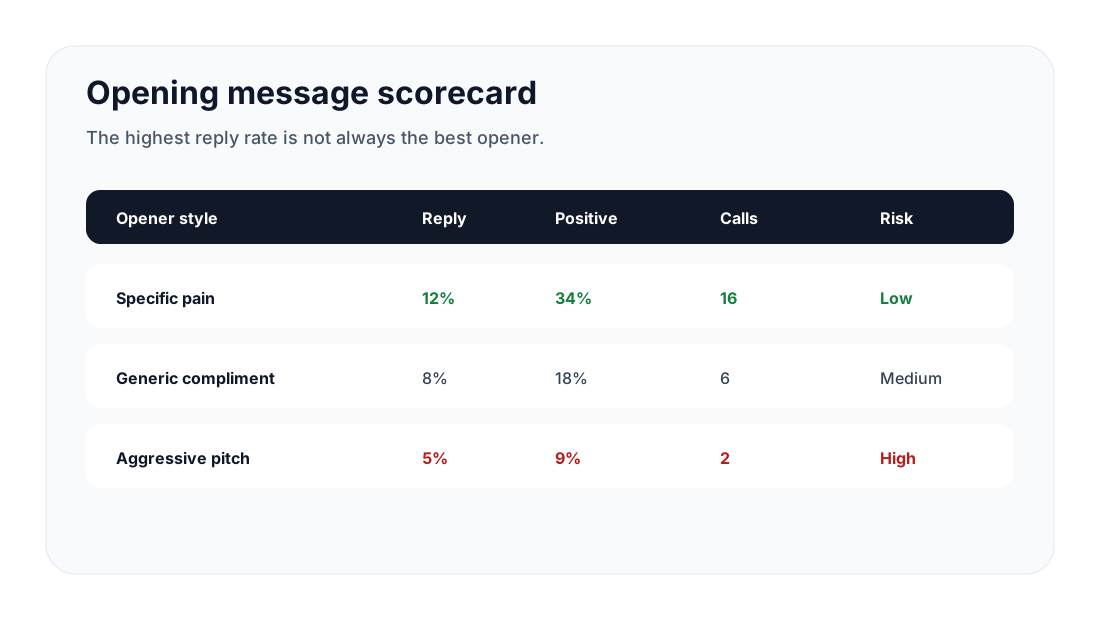
A simple scorecard keeps the decision grounded. Give each opener a grade for attention, fit, conversion, economics, and risk. The best opener is usually the one with the highest blended score, not the one with the loudest reply rate.
How Opening Benchmarks Affect ROI
Opening messages influence ROI in two ways. First, they change top-of-funnel volume by affecting replies. Second, they change the quality of those replies, which affects booked calls, show-up rate, close rate, and customer value.
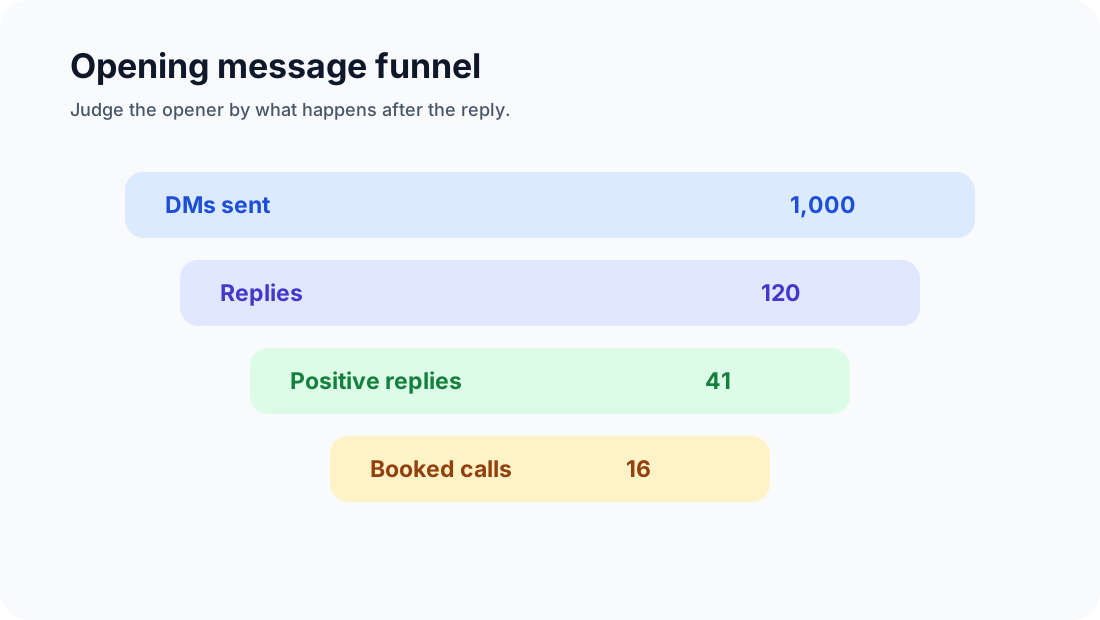
Imagine two openers sent to 1,000 prospects. Opener A gets 100 replies, but only 15 are positive and 3 become booked calls. Opener B gets 65 replies, but 30 are positive and 8 become booked calls. The first message looks better in a reply-rate screenshot. The second message is more likely to create revenue.
This is why every benchmark should eventually connect to money. If the booked calls are qualified and the offer has healthy margins, you can afford a lower reply rate. If every conversation takes manual labor and rarely turns into pipeline, a high reply rate can become expensive.
When to Keep, Rewrite, or Kill an Opener
Once a test has enough volume, put every opener into one of three buckets. Keep an opener when it creates positive conversations, booked calls, and acceptable economics without unusual negative feedback. Rewrite an opener when it gets attention but the replies are unclear, low intent, or difficult to convert. Kill an opener when it produces weak replies, poor fit, or risk signals that are not worth fixing.
Rewrites should be specific. If the opener gets replies but few booked calls, the problem may be the promise or the transition into the next message. If it gets negative replies, soften the ask or improve relevance. If it gets silence, tighten the first line, improve segmentation, or add a stronger reason for the prospect to care now.
How Many Opening Messages Should You Test?
Most teams should test two to four openers at a time. More than that sounds scientific, but it often spreads volume too thin. You want enough data per variation to make a useful decision. A 500-prospect test split across ten openers may leave each message with too little evidence.
Start with one control message and two challengers. The control is your best current opener. One challenger should improve relevance. The other should test a different angle, such as a trigger, a useful idea, or a more direct offer. This structure keeps the test focused while still giving you meaningful learning.
Common Mistakes That Distort Benchmarks
- Counting every reply as success: neutral and negative replies are not the same as sales opportunities.
- Testing on mixed audiences: founders, creators, local businesses, and agencies may respond for completely different reasons.
- Changing follow-ups mid-test: the opener may get blamed for a weak second message.
- Ignoring profile trust: a stronger profile can lift every opener without changing the copy.
- Scaling too early: a small winning sample can hide weak economics at higher volume.
Opening Message Benchmark Checklist
Before you scale a cold DM opener, make sure you can answer these questions:
- How many prospects received this exact opener?
- What was the reply rate?
- What percentage of replies were positive or qualified?
- How many booked calls came from those conversations?
- What was the estimated cost per booked call?
- What revenue and ROI does the funnel forecast?
- Did the opener create complaints, blocks, or brand risk?
If you cannot answer those questions, you do not have a benchmark yet. You have a copy test with incomplete math.
Model the ROI behind your opening message
Use the free Cold DM Calculator to estimate replies, positive conversations, booked calls, clients, profit, ROI, and cost per client from your opener test.
Use the Free CalculatorFinal Takeaway
Cold DM opening message benchmarks should help you decide what to scale, what to rewrite, and what to stop sending. Reply rate is the beginning of that decision, not the whole decision.
Track the opener through the full funnel: replies, positive conversations, booked calls, clients, revenue, costs, risk, and ROI. When an opening message creates qualified demand at a profitable cost, you can scale with far more confidence.