Instagram DM Funnel: How to Forecast Replies, Calls, Clients, and ROI
Most Instagram cold DM campaigns are judged too late. A team sends a few hundred messages, waits for replies, then tries to decide whether the list, the offer, the opener, or the follow-up was the problem.
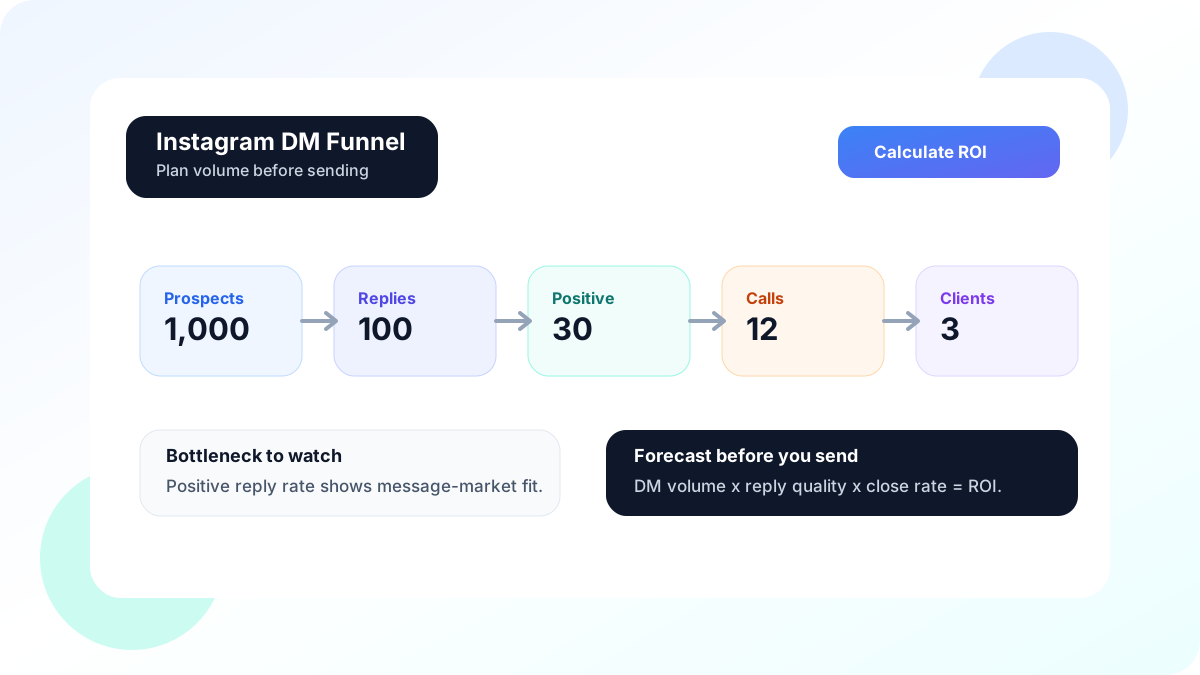
A better approach is to turn the campaign into a funnel before the first message goes out. When you know the numbers from prospect list to replies, positive replies, booked calls, clients, and revenue, you can spot risk early and make sharper decisions about volume, targeting, and offer quality.
Forecast your Instagram DM funnel first
Use ColdDMCalculator to estimate replies, positive replies, booked calls, clients, revenue, profit, and ROI before you spend time building or sending a campaign.
What an Instagram DM Funnel Actually Measures
An Instagram DM funnel is the path a prospect takes from being found to becoming a customer. It starts before outreach. The list quality, profile relevance, public signals, follower range, geography, language, and niche all affect what happens later.
The mistake is treating the funnel as one number, such as “we got three clients.” That result is useful, but it does not tell you where the campaign worked or failed. A clean funnel separates the stages so you can diagnose the campaign without guessing.
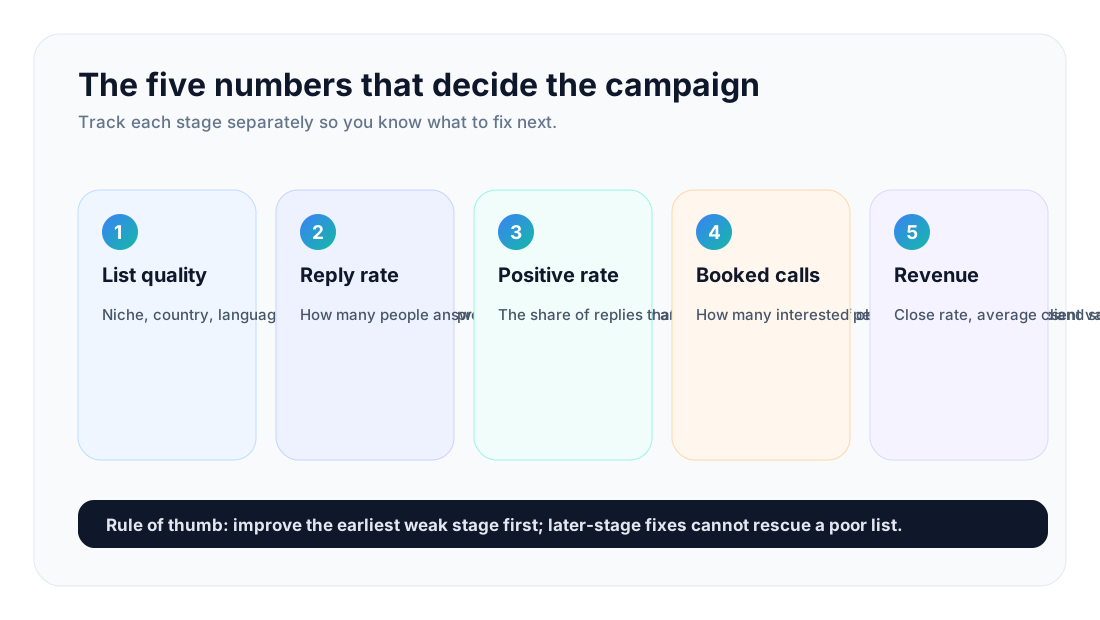
The Five Funnel Stages to Track
1. Prospect list quality
Your list decides the ceiling of the campaign. A short, well-filtered list of active profiles in the right niche will usually outperform a large generic export. Filter by the campaign goal: country, language, follower range, public business signals, recent activity, and exclusions that remove bad-fit accounts.
2. Reply rate
Reply rate tells you whether people are willing to engage. It is affected by list relevance, profile credibility, opener length, timing, and whether the message feels written for the recipient. A reply is not always a win, but a low reply rate is usually an early warning.
3. Positive reply rate
Positive reply rate is the share of replies that show interest. This number is often more important than raw replies. If people respond but mostly say “not interested,” ask whether the offer fits the audience or whether the message is attracting curiosity without purchase intent.
4. Call booking rate
Call booking rate measures how well interested replies move to the next step. It depends on the clarity of the ask, how much friction you add, and whether the prospect understands the value of the conversation. For some offers, the next step may be a sample, audit, quote, or checkout instead of a call.
5. Close rate and revenue
The final stage connects the outreach system to money. Close rate, average client value, campaign cost, cost per booked call, cost per client, profit, and ROI decide whether the campaign is worth repeating.
A Simple Instagram DM Funnel Example
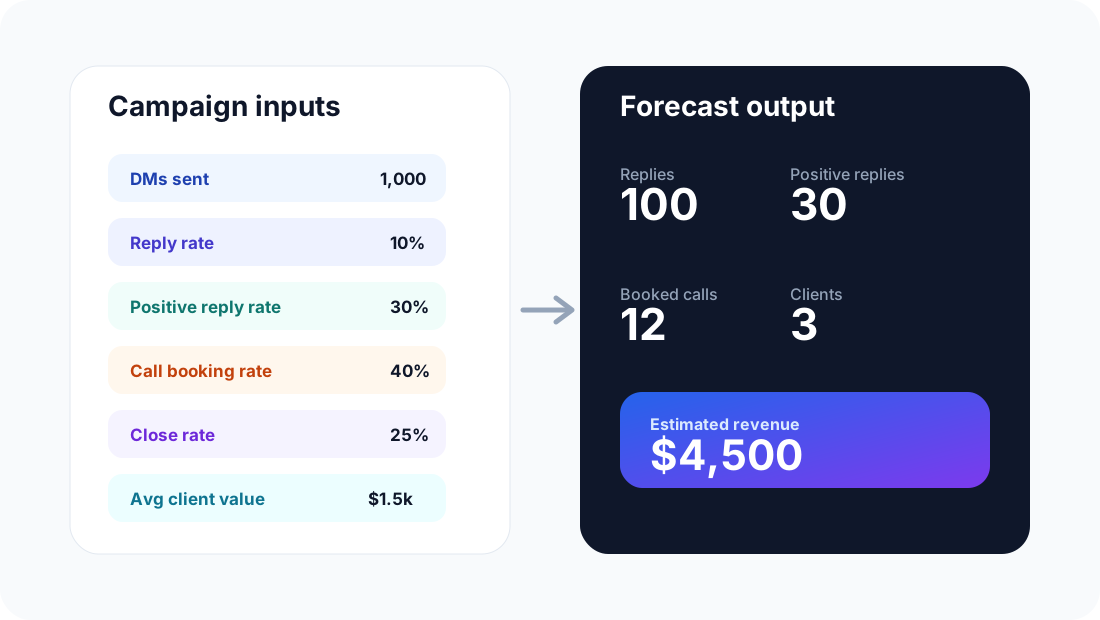
Imagine a small agency builds a list of 1,000 Instagram prospects. They expect a 10% reply rate, a 30% positive reply rate, a 40% booked-call rate from positive replies, and a 25% close rate from booked calls. The average client value is $1,500.
| Stage | Math | Forecast |
|---|---|---|
| Replies | 1,000 DMs x 10% | 100 replies |
| Positive replies | 100 replies x 30% | 30 positive replies |
| Booked calls | 30 positive replies x 40% | 12 booked calls |
| Clients | 12 booked calls x 25% | 3 clients |
| Revenue | 3 clients x $1,500 | $4,500 estimated revenue |
The key is not pretending the forecast is guaranteed. The key is seeing the campaign shape before launch. If the campaign only works at a 20% reply rate or a 60% call booking rate, that is a risk. If the campaign still works with conservative assumptions, it is easier to justify the time and list cost.
How to Diagnose Bottlenecks
Check targeting, opener relevance, profile credibility, message length, and whether the first line feels generic.
Check offer-market fit. Your message may be getting attention from people who do not actually want the outcome.
Check the call-to-action, friction, calendar link timing, proof, and whether the next step feels worth taking.
Check close rate, average client value, fulfillment margin, campaign cost, and whether the list is too expensive for the offer.
Fix the earliest weak stage first. If the list is poor, rewriting the follow-up sequence will not solve the campaign. If the list is strong but the positive reply rate is low, the next best test is usually a sharper offer angle or a more specific message.
What to Do Before You Send
- Define one audience. Pick a niche, profile type, country or region, language, and follower range.
- Build or preview the list. Use a prospecting workflow to check public profile signals before exporting a CSV.
- Write one clear opener. Keep it short, reference a real profile signal, and avoid pretending you know more than you do.
- Choose conservative assumptions. Model the campaign with realistic reply, positive reply, booking, and close rates.
- Set a stop rule. Decide what result would make you pause, rewrite, or change the list before sending more volume.
ColdDMCalculator is for campaign planning and public profile research workflows. Follow platform terms, privacy rules, and anti-spam laws. Do not use cold DM planning to spam, mislead recipients, bypass protections, or collect private data.
Where the Instagram Prospect Finder Fits
The funnel starts with the list. ColdDMCalculator's Instagram Prospect Finder helps you search worldwide by hashtag, keyword, profile, place, country, language, follower range, public profile signals, and exclusions. That makes it easier to build a list that matches the funnel you want to forecast.
Once you have a list size and campaign assumptions, the calculator helps estimate replies, positive replies, booked calls, clients, revenue, profit, break-even clients, cost per client, and ROI. That combination gives you a more complete workflow: find prospects, preview quality, export only when the list fits, then forecast the business outcome.
Frequently Asked Questions
What is an Instagram DM funnel?
It is the measurable path from prospect list to sent DMs, replies, positive replies, booked calls, clients, revenue, and ROI.
What is a good Instagram DM reply rate?
It depends on audience, offer, and message quality. Instead of relying on one universal benchmark, model a conservative range and compare actual results after each test batch.
Why track positive replies separately?
Because not every reply has business value. Positive reply rate tells you whether the campaign is creating real buying or booking intent.
How many DMs should I test first?
Start with a batch large enough to reveal signal but small enough to change direction. Many teams test 100 to 300 prospects before scaling the same angle.
Can I calculate ROI before sending?
Yes. Use estimated rates for each funnel stage, average client value, and campaign cost to forecast profit and ROI before launch.
Turn the next campaign into numbers
Build the prospect list, estimate every stage of the funnel, and decide whether the campaign is worth sending before you spend the time.