Cold DM Tools Pricing: How to Know If a Tool Is Worth It
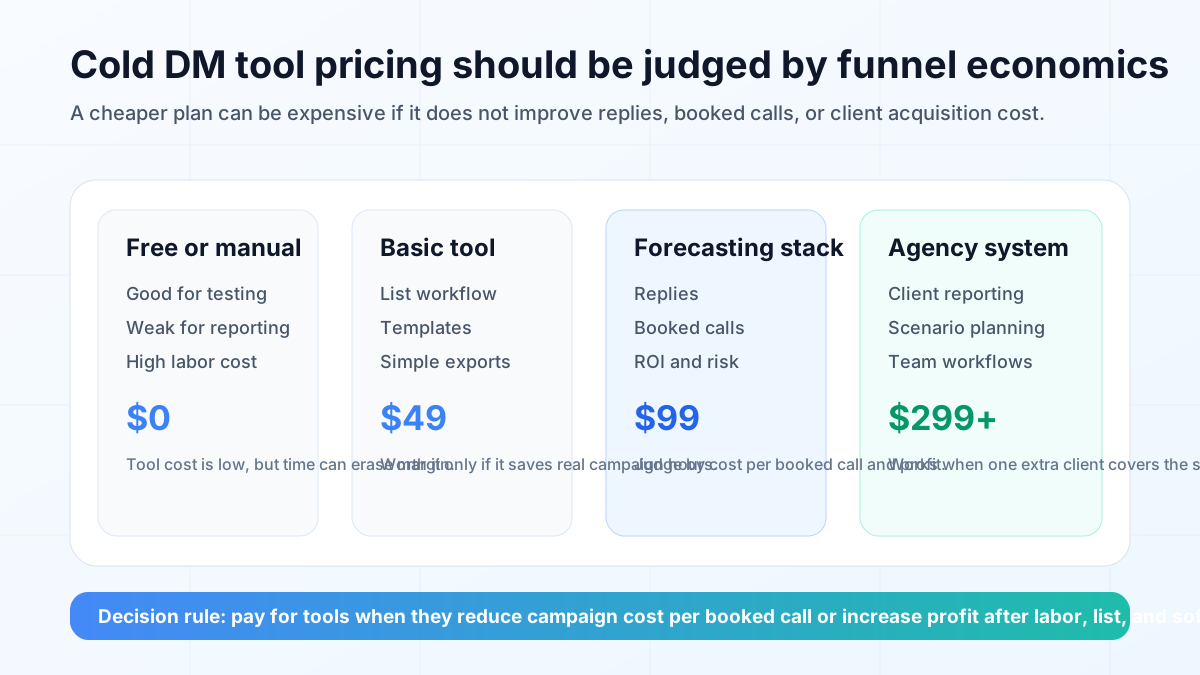
Cold DM tools pricing is easy to compare on a pricing page and hard to evaluate in a real campaign. A $29 plan can be expensive if it wastes hours, creates poor-fit lists, or makes reporting harder. A $299 plan can be cheap if one better booked call covers the entire month.
The right question is not "Which tool is cheapest?" The right question is "Does this tool improve the economics of the outreach funnel after software, data, labor, and campaign risk are included?"
Price the tool against the campaign
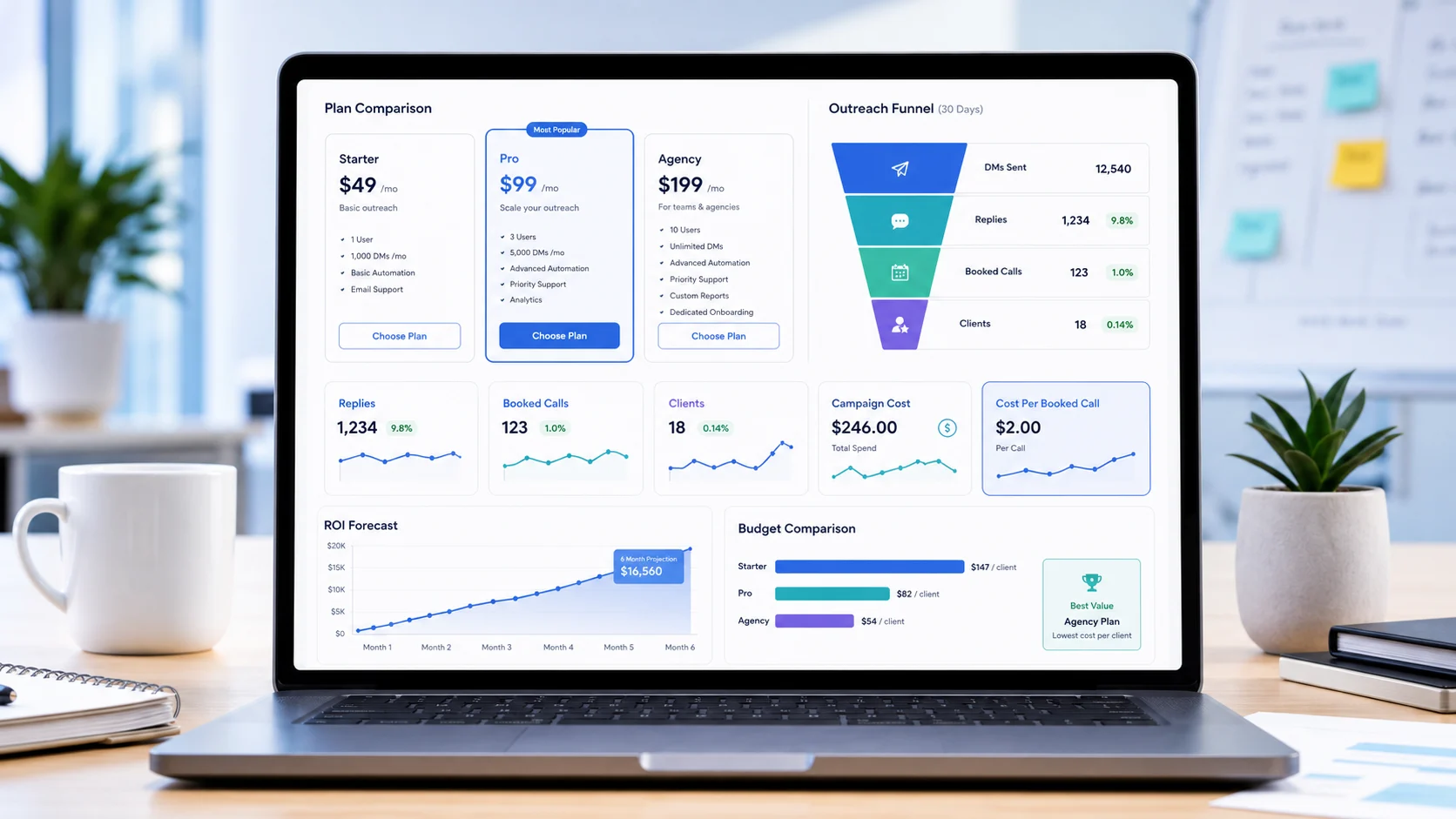
Use ColdDMCalculator to estimate replies, positive replies, booked calls, clients, revenue, profit, cost per booked call, and ROI before adding another outreach subscription.
The Short Answer
A cold DM tool is worth paying for when it clearly improves at least one economic lever: better list quality, faster prospect research, higher positive reply rate, lower labor cost, cleaner reporting, safer campaign planning, or lower cost per booked call. If the tool only adds another dashboard without changing campaign outcomes or saving time, the subscription is probably not justified yet.
For agencies and appointment-setting teams, pricing should be judged against client economics. If a tool costs $149 per month and helps book one extra qualified sales call, it may pay for itself quickly. If it costs $49 but forces manual cleanup, duplicate checks, weak exports, and unclear ROI reporting, it can silently raise your real campaign cost.
What to Include in Cold DM Tool Cost
Most teams compare subscription prices only. That misses the real cost of running a cold DM operation. A tool is just one line item inside a broader campaign budget.
| Cost category | What it includes | Why it matters |
|---|---|---|
| Software subscription | Prospecting, analytics, CRM, reporting, forecasting, enrichment, or workflow tools | The visible monthly price |
| Data and list cost | Prospect credits, CSV exports, profile research, enrichment, verification, or manual sourcing | Bad lists reduce reply quality |
| Labor cost | Research, filtering, writing, personalization, follow-up, reporting, and sales handoff | Often larger than software cost |
| Opportunity cost | Time spent fixing bad workflows instead of sending better campaigns or closing clients | Shows whether cheap tools are actually expensive |
| Risk cost | Complaints, poor-fit targeting, platform rule issues, and brand damage from sloppy outreach | Not always obvious in a pricing table |
When you compare tools, add all of these costs into the forecast. The real price is not the card on the pricing page. It is the total cost required to produce qualified conversations and clients.
The ROI Formula for Cold DM Software
Use a simple formula before you buy. Estimate the campaign outcome with the tool, subtract the campaign outcome without the tool, then compare the difference against total tool cost.
Incremental profit can come from more clients, higher close quality, lower labor cost, lower cost per booked call, or a faster reporting workflow. If the tool does not change any of those numbers, its ROI is zero even if the interface looks useful.
For example, suppose a social selling agency pays $99 per month for a workflow that saves five hours of research and reporting. If those hours are worth $35 each, the tool creates $175 in labor value before campaign results are counted. If the same tool also helps improve list quality enough to book one extra call, the value may be much higher.
Pricing Benchmarks by Tool Type
Cold DM tools are not all the same category. A template library, prospecting workflow, CRM, analytics dashboard, and ROI calculator solve different jobs. Comparing them only by monthly price creates bad decisions.
| Tool type | Typical pricing pattern | Best use case | How to judge value |
|---|---|---|---|
| Manual spreadsheet stack | Free to low cost | Early testing, small campaigns | Useful until manual work slows down learning |
| Template or script tool | One-time fee or low monthly | Message structure and training | Worth it if it improves positive replies |
| Prospecting tool | Monthly plan, credits, or CSV unlocks | Finding better public profiles and list segments | Judge by list fit and time saved |
| CRM or pipeline tool | Per seat monthly | Follow-up, ownership, handoff, notes, and stages | Judge by booked-call follow-through |
| Forecasting or analytics tool | Free, credit-based, or monthly | Planning, reporting, scenario modeling, ROI decisions | Judge by better budget and client decisions |
| Agency operating system | Higher monthly or annual pricing | Client reporting, team workflows, repeatable delivery | Worth it when one client or saved workflow pays for it |
Cost Per Booked Call Is the Cleanest Comparison
For many DM campaigns, cost per booked call is a better comparison metric than subscription price. It connects the tool to the outcome the sales team or client actually cares about. If Tool A costs $49 and produces five booked calls from a messy workflow, while Tool B costs $149 and produces twelve qualified calls with cleaner reporting, Tool B may be cheaper in practice.
Total campaign cost should include software, prospect credits, labor, and any agency or contractor time. Booked calls should be qualified enough to matter. Inflating call volume with poor-fit prospects makes the tool look better than it is.
This is where a calculator helps. Model the same campaign twice: once with your current workflow and once with the paid tool. Keep list size and average client value realistic. Change only the assumptions the tool can actually improve, such as research time, positive reply rate, or booking rate.
When Cheap Tools Become Expensive
Cheap tools are useful when they help you learn quickly. They become expensive when they hide work that someone still has to do manually. If a tool exports low-quality prospects, duplicates, irrelevant geographies, inactive profiles, or unusable notes, the cleanup cost can exceed the subscription savings.
Low-fit prospects reduce positive reply rate and make every follow-up less efficient.
Agencies need to explain replies, calls, clients, and ROI. Screenshots alone rarely satisfy clients.
CSV fixes, duplicate removal, and hand-built reports can turn a cheap tool into an expensive process.
If you cannot model outcomes before sending, you may spend money on campaigns that were unlikely to work.
When Expensive Tools Are Worth It
More expensive tools can make sense when the campaign has enough value behind it. A $299 monthly stack may be excessive for a freelancer testing one offer. It may be cheap for an appointment-setting agency managing five clients, because the reporting, list segmentation, and forecasting workflow can protect margins.
Expensive tools are usually worth it when they create repeatability. That means the team can build lists faster, compare segments, forecast revenue, explain results to clients, and decide whether to scale or pause without starting from scratch every time.
For agencies, the buying question should be: does this tool help us sell, deliver, or retain profitable campaigns? If it only feels impressive internally, wait. If it creates clearer client reporting or prevents unprofitable campaign launches, it may be worth paying for.
A Simple Buying Framework
- Define the campaign goal. Are you trying to get replies, positive conversations, booked calls, clients, creator partnerships, or pipeline?
- Estimate the current funnel. Use your baseline reply rate, positive reply rate, booking rate, close rate, average client value, and cost.
- Identify the bottleneck. Do not buy a reporting tool if the real problem is list quality. Do not buy a list tool if the real problem is close rate.
- Model the tool impact. Estimate what the tool can realistically improve and leave unrelated assumptions unchanged.
- Set a payback rule. Decide how many saved hours, booked calls, or clients are required for the tool to be worth renewing.
This framework prevents tool shopping from becoming procrastination. If the tool does not solve the bottleneck, it is not the next best purchase.
The Cold DM Tool Scorecard
Before buying, score each tool against the job it needs to do. Give each category a simple 1 to 5 score, then multiply the highest-impact categories by your campaign volume. A solo creator running 100 DMs per month does not need the same workflow as an agency managing 10,000 prospects across clients.
| Scorecard area | Question to ask | Why it affects pricing |
|---|---|---|
| List quality | Does the tool help find prospects that match the offer? | Better fit improves positive replies and reduces wasted follow-up |
| Workflow speed | Does it remove manual research, tagging, cleanup, or reporting work? | Saved hours can justify a higher subscription |
| Forecasting | Can you model replies, calls, clients, and ROI before sending? | Forecasting prevents bad campaigns from becoming expensive tests |
| Reporting | Can the team explain performance to a client or founder? | Clear reporting helps retain clients and protect margins |
| Risk controls | Does it encourage responsible targeting and realistic assumptions? | Lower risk protects brand reputation and long-term deliverability |
If two tools have similar pricing, buy the one that improves the weakest stage in your funnel. If one tool is more expensive, it needs to prove either better economics or a meaningful operational advantage. Preference alone is not a business case.
ColdDMCalculator is for forecasting, public-profile research planning, and outreach economics. It does not send DMs, bypass platform limits, automate spam, access private data, or guarantee campaign results. Follow platform terms, privacy rules, and applicable outreach laws.
How ColdDMCalculator Fits Into Pricing Decisions
ColdDMCalculator helps you compare tools by turning pricing into campaign math. Instead of debating whether a subscription feels expensive, you can forecast how many replies, positive replies, booked calls, clients, revenue, profit, and break-even clients are needed to justify it.
Pair it with the Instagram Prospect Finder when list quality is the bottleneck. Use the calculator when budget, booked-call economics, or client reporting is the bottleneck. Use the cold DM metrics guide to make sure you are judging the tool by the right outcomes.
Frequently Asked Questions
How much should I spend on cold DM tools?
Spend only what the campaign economics can support. If the tool saves labor, improves qualified replies, lowers cost per booked call, or helps win and retain clients, it may justify a higher monthly price.
Are free cold DM tools enough?
Free tools are often enough for early tests. Upgrade when manual work, poor reporting, list cleanup, or unreliable forecasting starts costing more than the paid tool.
Should I pay for prospecting credits?
Prospecting credits are worth it when the resulting list is targeted, current, and relevant enough to improve positive replies. They are not worth it if they create broad lists that still need heavy cleanup.
What metric should agencies use to compare tools?
Agencies should compare cost per qualified booked call, cost per client, profit after labor, client reporting quality, and campaign ROI. Subscription price alone is too shallow.
Run the tool through the numbers
Before you subscribe, forecast whether the tool can lower cost per booked call, improve client acquisition, or save enough labor to be worth renewing.