Cold Email Open Rate Benchmarks 2026: What's Normal & How to Improve
Cold email open rates have changed significantly in 2026. With stricter spam filters, Apple's Mail Privacy Protection, and evolving buyer behavior, knowing what's a "good" open rate is harder than ever. In this guide, we break down the latest benchmarks by industry and share actionable strategies to improve your numbers.
What Are Cold Email Open Rates in 2026?
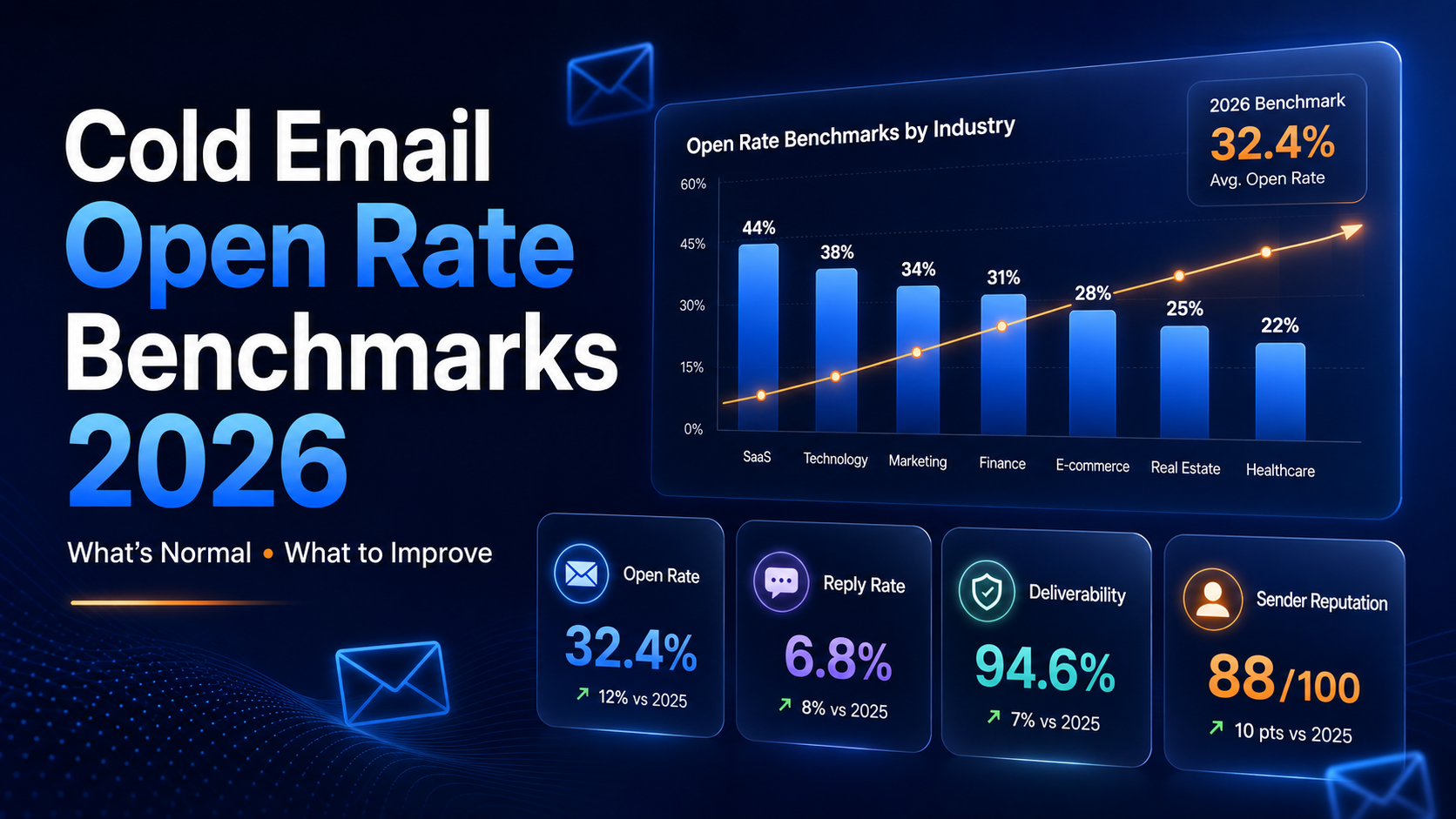
Cold email open rates measure the percentage of recipients who open your email out of the total delivered. In 2026, the average cold email open rate across all industries hovers between 35-55%, but this varies significantly by sector, audience quality, and sending infrastructure.
Several factors make 2026 unique for cold email metrics:
- Apple MPP (Mail Privacy Protection) inflates open rates by auto-loading pixels for all emails. This means some "opens" aren't real.
- Google & Yahoo's 2024 sender requirements are now fully enforced, making authentication (SPF, DKIM, DMARC) mandatory for bulk senders.
- AI-powered spam filters are more aggressive at detecting outreach patterns, making deliverability harder.
- Buyer fatigue means recipients are more selective about what they open.

Industry Benchmarks for 2026
Your "good" open rate depends entirely on your industry. Here are the 2026 benchmarks based on aggregated data from major cold email platforms:
| Industry | Avg Open Rate | Avg Reply Rate | Best Day to Send |
|---|---|---|---|
| Software & SaaS | 40-50% | 3-8% | Tuesday |
| Professional Services | 45-55% | 5-12% | Wednesday |
| E-commerce & Retail | 30-40% | 1-4% | Thursday |
| Real Estate | 35-45% | 4-10% | Tuesday |
| Healthcare | 30-38% | 2-5% | Wednesday |
| Finance & Insurance | 35-42% | 3-6% | Thursday |
| Education & Training | 40-48% | 4-8% | Tuesday |
| Marketing & Advertising | 35-45% | 2-6% | Wednesday |
Note: Open rates above 55% are exceptional but rare in 2026. If your open rates exceed 60%, you may be seeing inflated numbers from Apple MPP. Use click-through and reply rates as more reliable engagement metrics.
Why Open Rates Still Matter
Some marketers argue that open rates are a vanity metric. While it's true that reply rates and conversions matter more, open rates remain important for several reasons:
- Deliverability health: Low open rates signal to email providers that your content isn't engaging, which hurts future deliverability.
- Subject line testing: Open rates are the fastest way to A/B test subject lines and sender names.
- List quality check: Consistently low open rates indicate your list needs cleaning or your targeting is off.
- Sender reputation: Engagement metrics (including opens) feed into your domain reputation score.
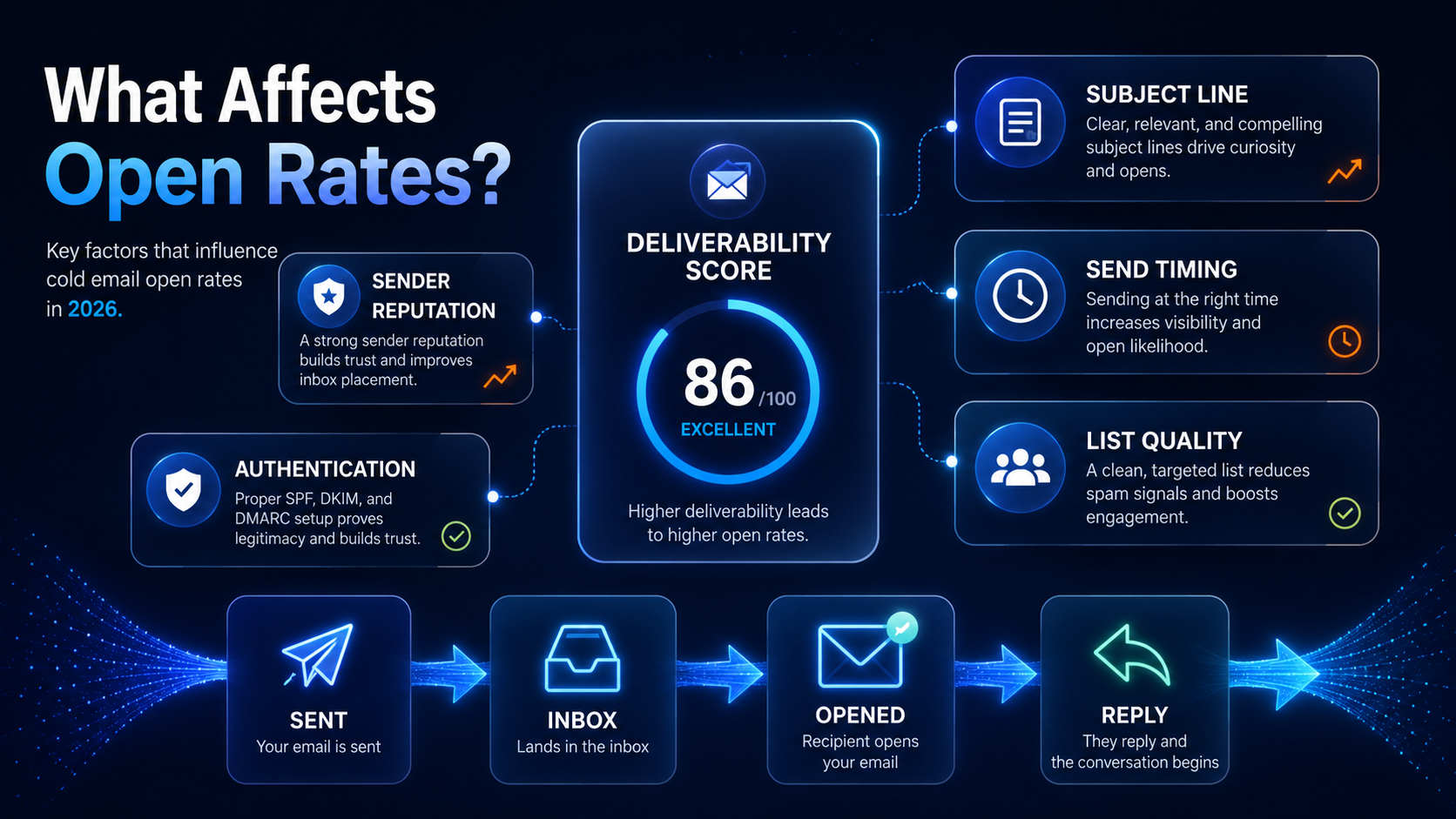
Factors That Affect Open Rates in 2026
1. Sender Reputation
Your domain reputation is the single biggest factor determining whether your email lands in the inbox or spam folder. In 2026, Google and Microsoft have made sender reputation even more critical with their updated bulk sender policies. A poor reputation can tank your open rates to below 20%.

2. Subject Line Quality
Your subject line is the first thing recipients see. In 2026, the best-performing subject lines are:
- Personalized (using first name or company name) — 22% higher open rates
- 6-10 words long — optimal length for mobile and desktop
- Curiosity-driven — creates intrigue without being clickbaity
- Relevant to recipient's role — shows you've done your research
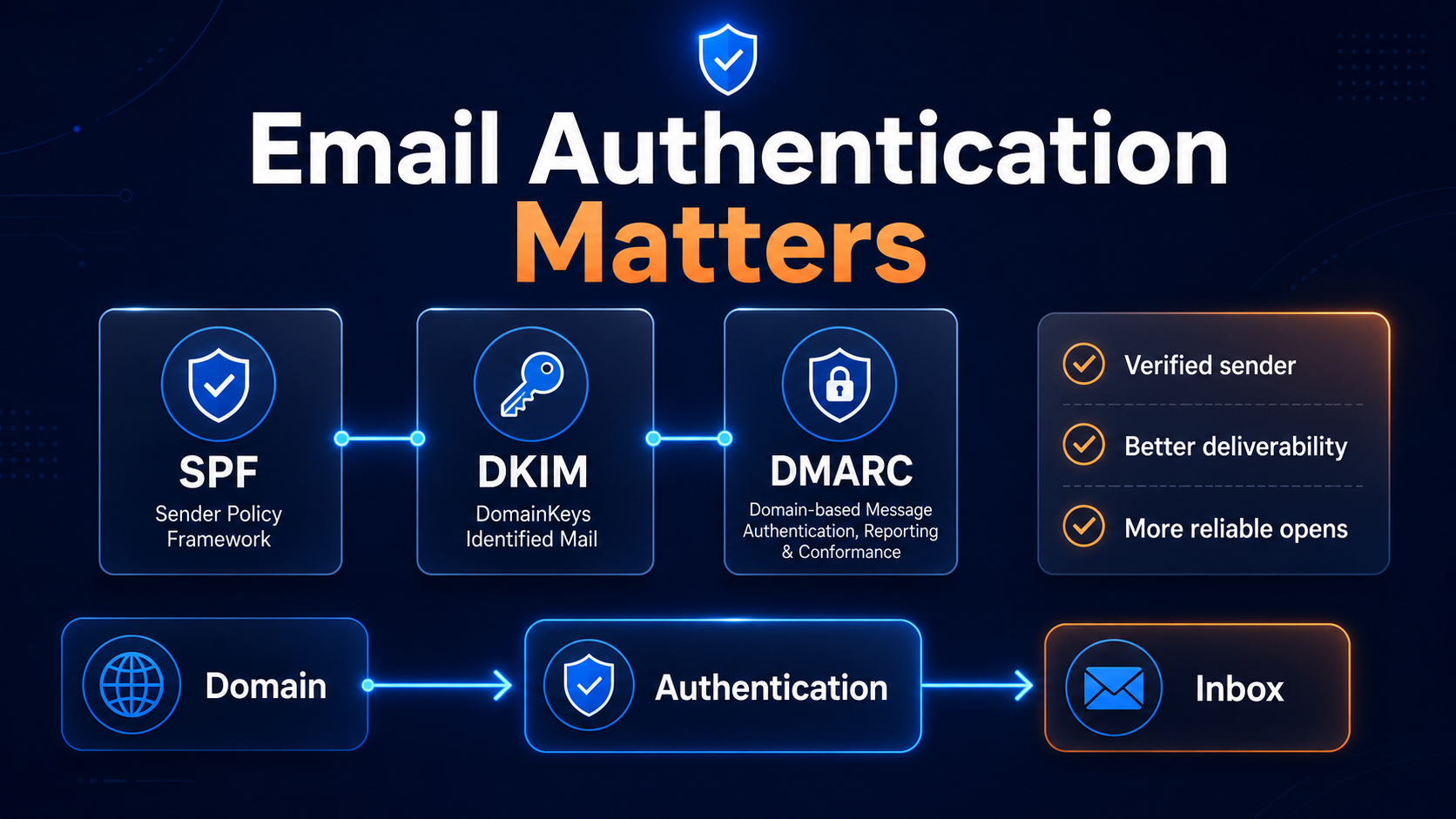
3. Email Authentication
SPF, DKIM, and DMARC are non-negotiable in 2026. Without proper authentication, your emails will either be rejected or land in spam. DMARC enforcement has become standard for most major email providers.
4. Send Timing
Tuesday through Thursday between 6-10 AM in the recipient's timezone consistently perform best. Monday mornings are too busy, and Friday afternoons have lower engagement. Use a tool that automatically optimizes send times.
5. List Quality
Sending to outdated or purchased lists is the fastest way to destroy your deliverability. In 2026, email providers are better than ever at detecting spam traps and low-engagement recipients. Always use verified, opted-in data.
How to Improve Your Cold Email Open Rates
Here are proven strategies that work in 2026:
Warm Up Your Domain
Before launching a cold email campaign, warm up your domain by sending low volumes (10-20 emails/day) and gradually increasing. This builds a positive sending reputation. Most warming tools take 2-4 weeks for full results.
Use a Recognizable Sender Name
People open emails from people they recognize. Use your real name and a professional photo. Avoid generic addresses like "info@company.com" — use your name instead.
Personalize Beyond the First Name
Personalization in 2026 goes beyond "Hi {FirstName}." Top performers reference specific details about the recipient's company, recent news, or mutual connections. This signals that the email is crafted, not mass-sent.
Clean Your List Regularly
Remove hard bounces, unengaged subscribers, and invalid emails every 30 days. Use a real-time email verification service to validate new leads before adding them to your campaigns.

A/B Test Everything
Test one variable at a time:
- Subject lines (personalized vs. curiosity-driven)
- Sender names (personal vs. company)
- Send times (morning vs. afternoon)
- Email length (short vs. medium)
- Preheader text (with vs. without value prop)
Segment Your Audience
Not all leads are the same. Segment by industry, company size, job title, or engagement level. Send tailored messaging to each segment. Segmented campaigns consistently outperform non-segmented ones by 30-50%.
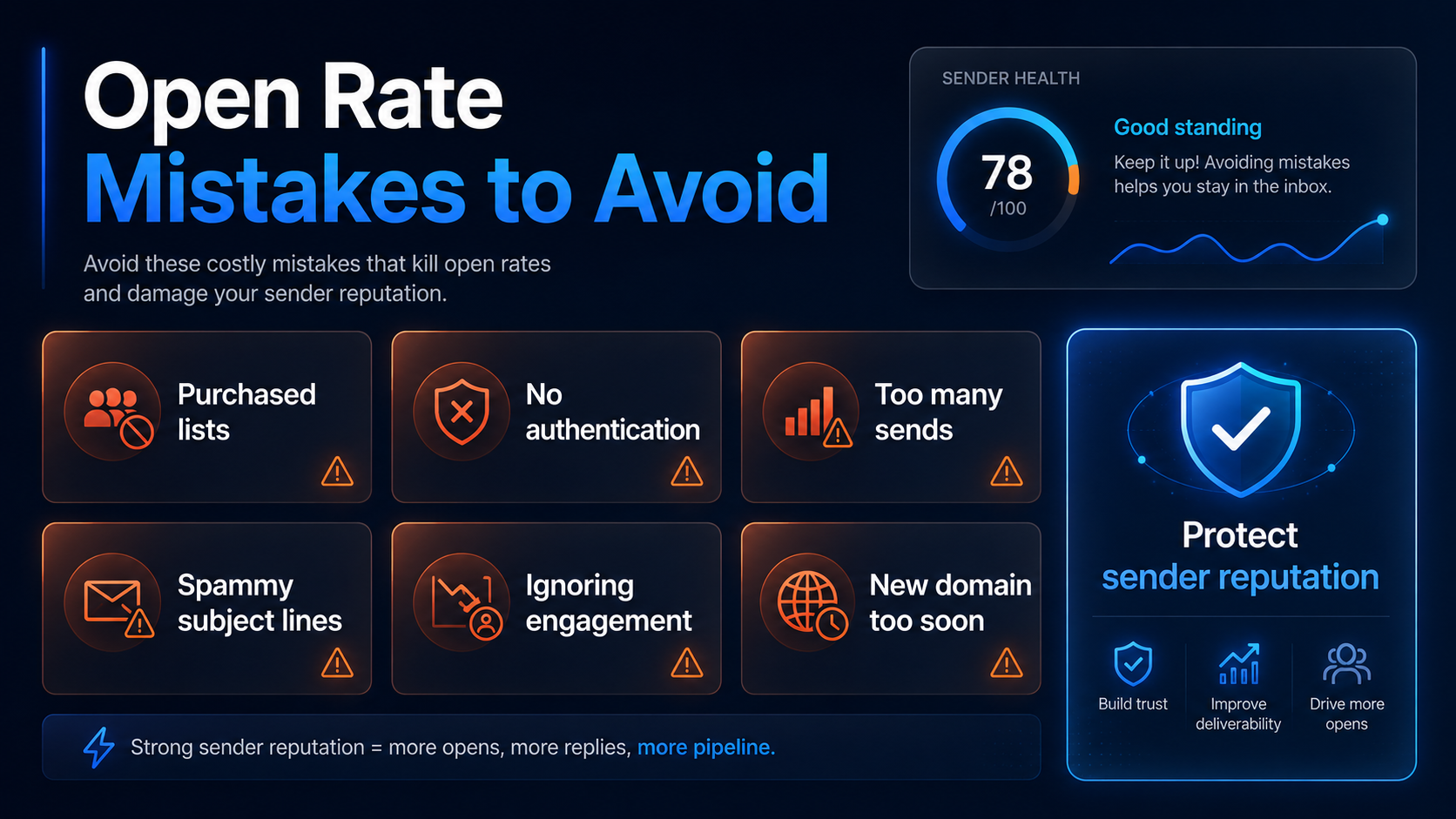
Common Mistakes That Hurt Open Rates
Avoid these pitfalls to protect your deliverability:
- Using purchased lists — These are full of spam traps and invalid addresses.
- No email authentication — SPF, DKIM, and DMARC are mandatory in 2026.
- Sending too frequently — More than 2-3 emails per week per prospect causes fatigue.
- Ignoring engagement signals — If someone hasn't opened in 30 days, remove them.
- Spammy subject lines — Avoid ALL CAPS, excessive punctuation, and trigger words like "free" or "guaranteed."
- No plain text version — HTML-only emails are more likely to be flagged as spam.
- Sending from a new domain — New domains have no reputation. Warm them up first.


Tools to Track & Improve Open Rates
Here are the best tools in 2026 for monitoring and improving cold email performance:
- Instantly / Smartlead — Cold email sending platforms with built-in deliverability monitoring
- Mailgun / SendGrid — Transactional email APIs with deliverability analytics
- Google Postmaster Tools — Free tool to monitor your domain reputation
- Microsoft SNDS — Free reputation monitoring for Outlook/Hotmail delivery
- NeverBounce / ZeroBounce — Email verification services to keep your list clean
- Litmus / Email on Acid — Pre-send testing for spam score and rendering
Measuring What Matters Beyond Open Rates
While open rates are useful, don't optimize solely for them. Here's what else to track:
- Reply rate — The metric that actually generates conversations and revenue
- Click-through rate — Measures if recipients are engaging with your content
- Bounce rate — High bounces indicate list quality issues
- Spam complaint rate — Keep below 0.1% to maintain deliverability
- Unsubscribe rate — High unsubscribes indicate targeting or messaging issues
- Conversion rate — The ultimate metric: how many leads turned into customers
Pro tip: Use our Cold DM Calculator to compare cold email and cold DM ROI. See which channel delivers more replies and clients for your specific business metrics.
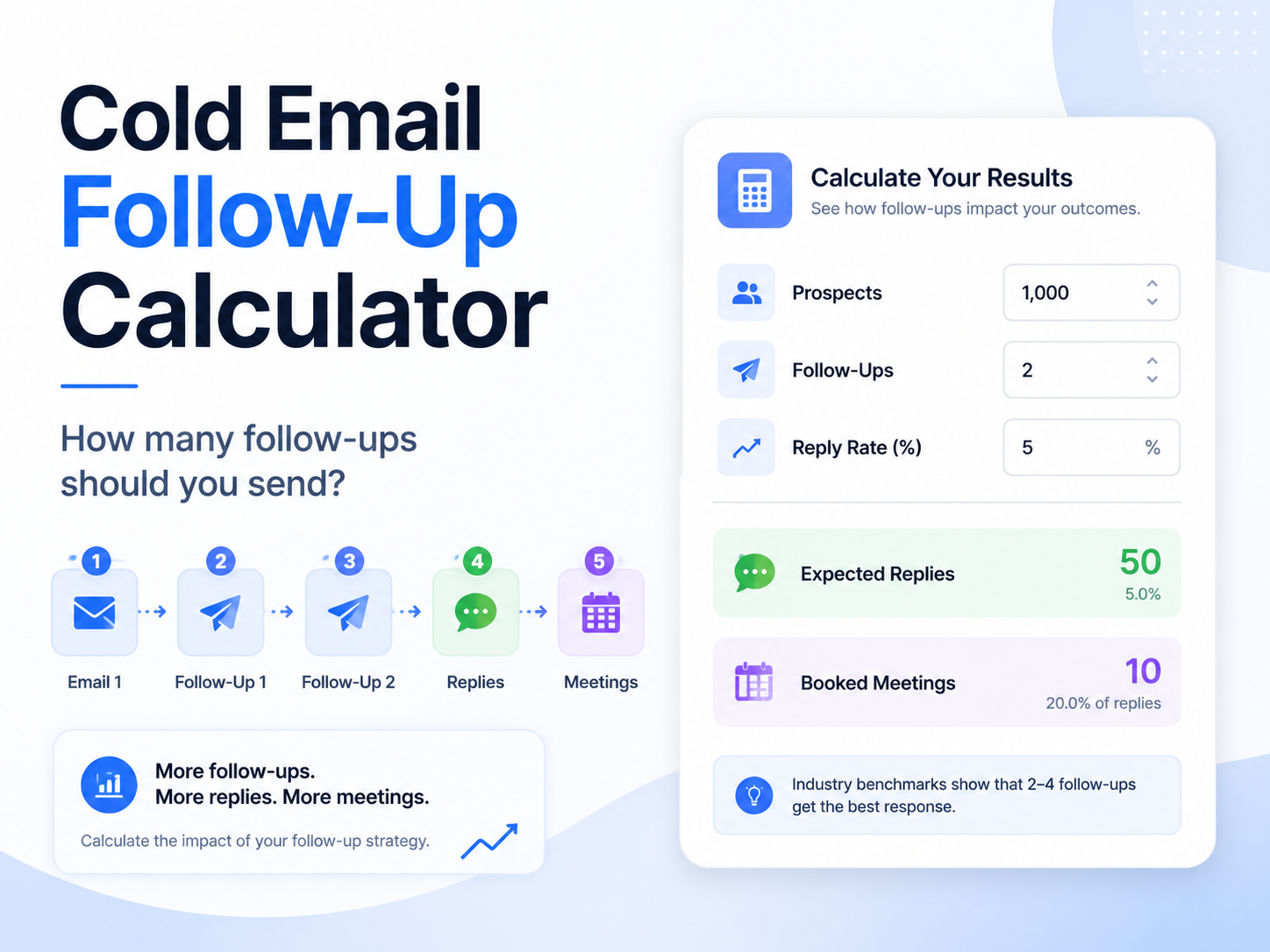
Calculate Your Cold Email ROI
See exactly how many emails you need to send to hit your revenue goals. Use our free calculator to model different open rates, reply rates, and conversion scenarios.
Try the Calculator →Frequently Asked Questions
A good cold email open rate in 2026 ranges from 35-55% depending on your industry. Software and SaaS averages 40-50%, professional services 45-55%, e-commerce 30-40%, and real estate 35-45%. Anything above 50% is considered excellent.
Open rates typically drop due to poor sender reputation, spam complaints, non-personalized subject lines, or sending to outdated lists. Apple's Mail Privacy Protection also inflates open rate data. Clean your list regularly and monitor your domain reputation.
Start with 30-50 emails per day per email address to warm up your domain. Once your deliverability is stable, you can scale to 100-200 per day. Sending more than that without proper infrastructure will hurt your sender reputation.
Subject line length directly affects open rates. Subject lines with 6-10 words tend to perform best. Email body length affects reply rates more than open rates. Keep your cold emails between 50-125 words for optimal engagement.